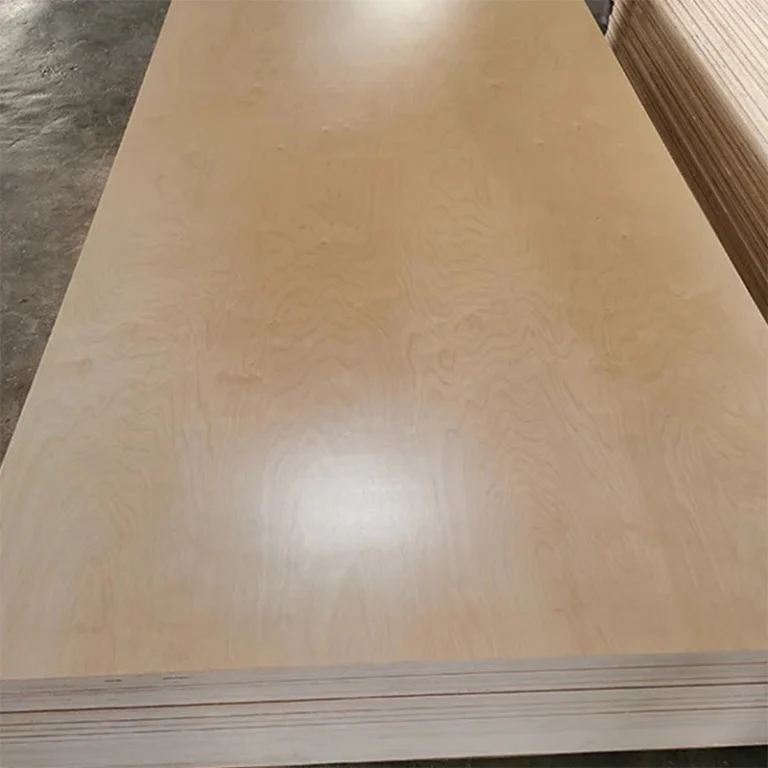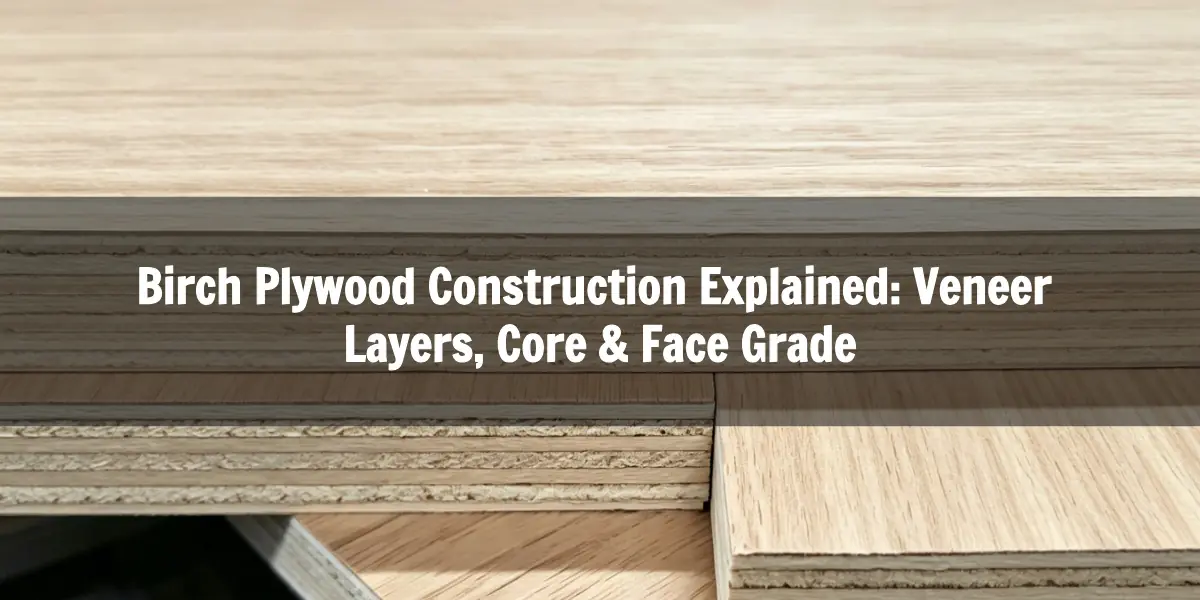
Birch plywood construction refers to how multiple birch veneer sheets are arranged, bonded, and pressed together to create a strong, stable, and durable plywood panel. Unlike solid wood, birch plywood uses several thin veneer layers with alternating grain directions.
The construction of a plywood panel affects its strength, dimensional stability, appearance, machining performance, and resistance to warping. For buyers, furniture manufacturers, and importers, understanding birch plywood layers, core construction, number of plies, and veneer grades is important when selecting the right product.
This guide explains the main components of birch plywood construction and the factors that determine panel quality.
What Is Birch Plywood Construction?
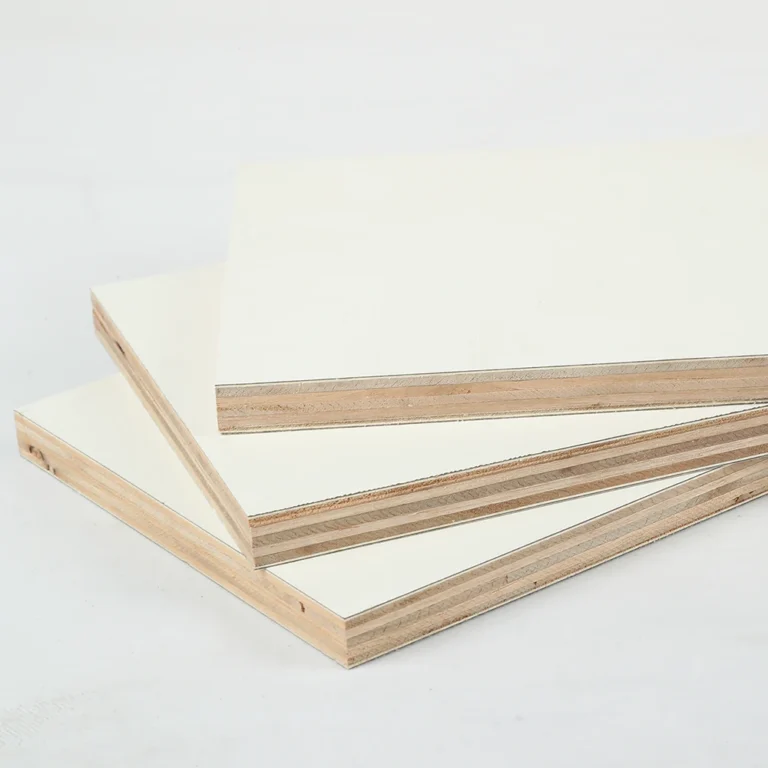
A typical birch plywood panel consists of three basic parts:
- Face veneer – the visible front surface
- Core veneers – the internal structural layers
- Back veneer – the rear surface
These veneer layers are bonded together with adhesive and pressed under controlled temperature and pressure. The veneers are normally arranged with alternating grain directions to create a balanced and stable panel.
The final performance of birch plywood depends on several factors, including veneer quality, adhesive bonding, number of plies, thickness, grain orientation, symmetry, and core quality.
Face Veneer, Core Veneers and Back Veneer
1. Face Veneer
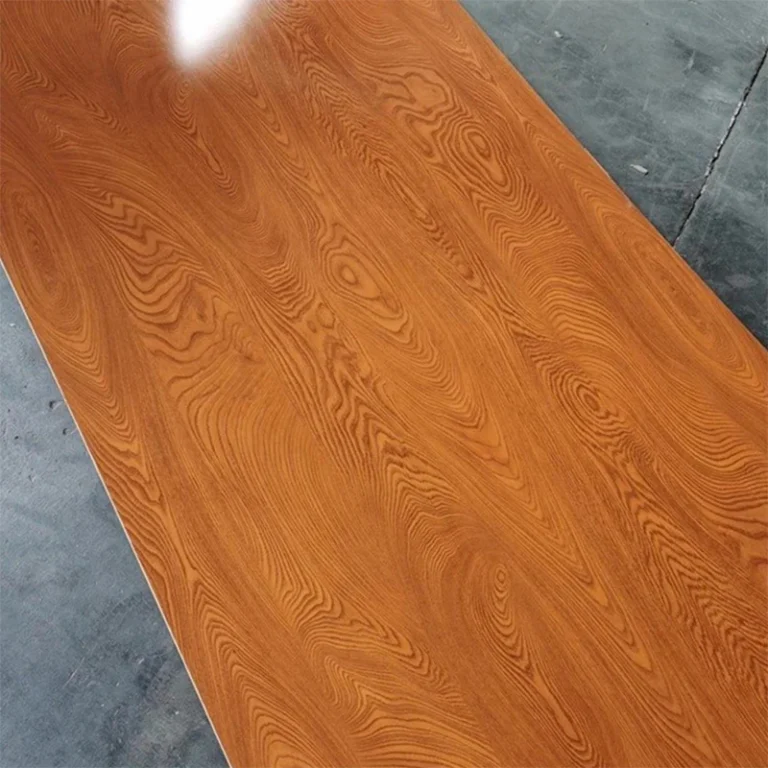
The face veneer is the outer layer on the front of the plywood sheet. It has the biggest influence on the visible appearance of the finished panel.
Depending on the plywood grade, the face may have a clean and uniform appearance or contain natural characteristics such as small knots, color variation, or repaired areas.
High-quality face veneers are commonly used for:
- Furniture
- Cabinets
- Shelving
- Doors
- Decorative panels
- CNC-machined components
However, face grade mainly describes surface appearance and does not automatically indicate the overall structural quality of the plywood.
2. Core Veneers
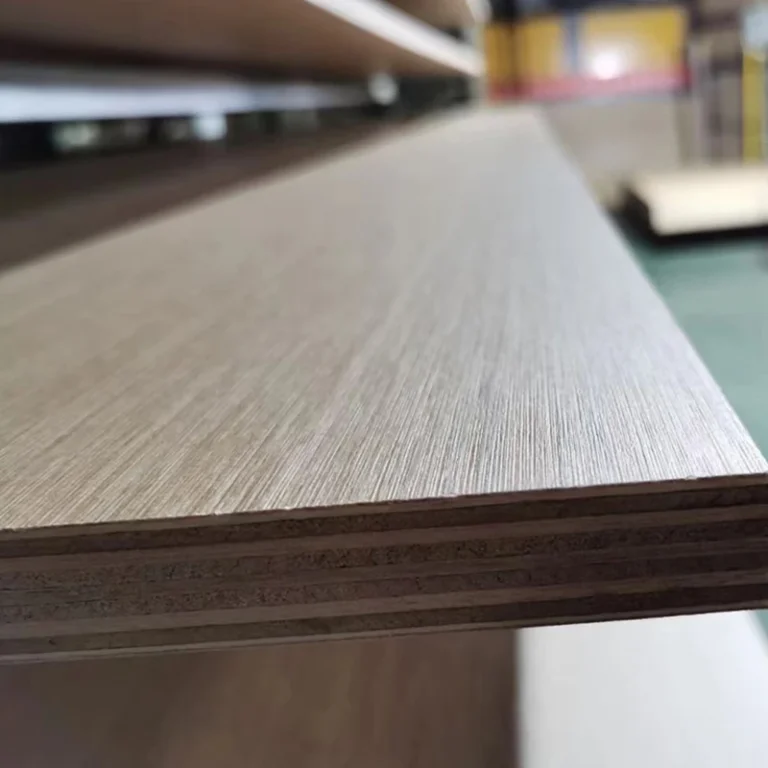
Core veneers are the internal layers between the face and back veneers. They make up most of the plywood’s structure and have a major influence on strength and machining performance.
Good birch plywood should have relatively uniform core veneers with consistent thickness and strong bonding between layers.
Core quality becomes especially important when plywood is used for CNC routing, drilling, cutting, furniture components, or applications where the plywood edge remains visible.
Poor core construction can result in gaps, voids, weak edges, and inconsistent machining results.
3. Back Veneer
The back veneer is the outer layer on the opposite side of the panel.
The back grade does not always need to match the face grade. For example, a plywood panel may have a higher-grade face for furniture production and a slightly lower-grade back to control cost.
This is why birch plywood specifications often include combinations such as B/BB, BB/BB, and BB/CP.
If you want to understand how these grades differ, see our detailed guide to Birch Plywood Grades.
Number of Plies in Birch Plywood
The number of plies refers to the total number of veneer layers used to manufacture a plywood panel.
Common birch plywood constructions include:
- 3-ply
- 5-ply
- 7-ply
- 9-ply
- 11-ply
- 13-ply
- 15-ply
The exact number depends on the final panel thickness and the thickness of the individual veneers.
Generally, thicker plywood requires more veneer layers, but this is not always a simple relationship. Different manufacturers may use different veneer thicknesses to achieve the same final panel thickness.
Does More Plies Mean Better Plywood?
Not necessarily.
A higher number of plies can contribute to a more uniform structure, but overall plywood quality also depends on:
- Veneer quality
- Core construction
- Adhesive quality
- Pressing conditions
- Grain orientation
- Panel thickness
- Manufacturing consistency
Therefore, buyers should evaluate the complete birch plywood construction instead of judging quality only by the number of layers.
Cross-Grain Construction
Cross-grain construction is one of the most important features of plywood.
Adjacent veneer layers are normally positioned with their grain directions perpendicular to each other. For example, one veneer layer may run horizontally while the next runs vertically.
This alternating grain structure helps distribute stress across the panel and improves dimensional stability.
The main benefits include:
- Better resistance to warping
- Improved dimensional stability
- Strength in different directions
- Greater panel rigidity
- More consistent machining performance
Because wood naturally expands and contracts differently along and across the grain, cross-grain construction helps control this movement.
This is one of the main reasons birch plywood can provide more stable large panels than solid wood.
Birch Plywood Thickness
Thickness is another important part of plywood construction.
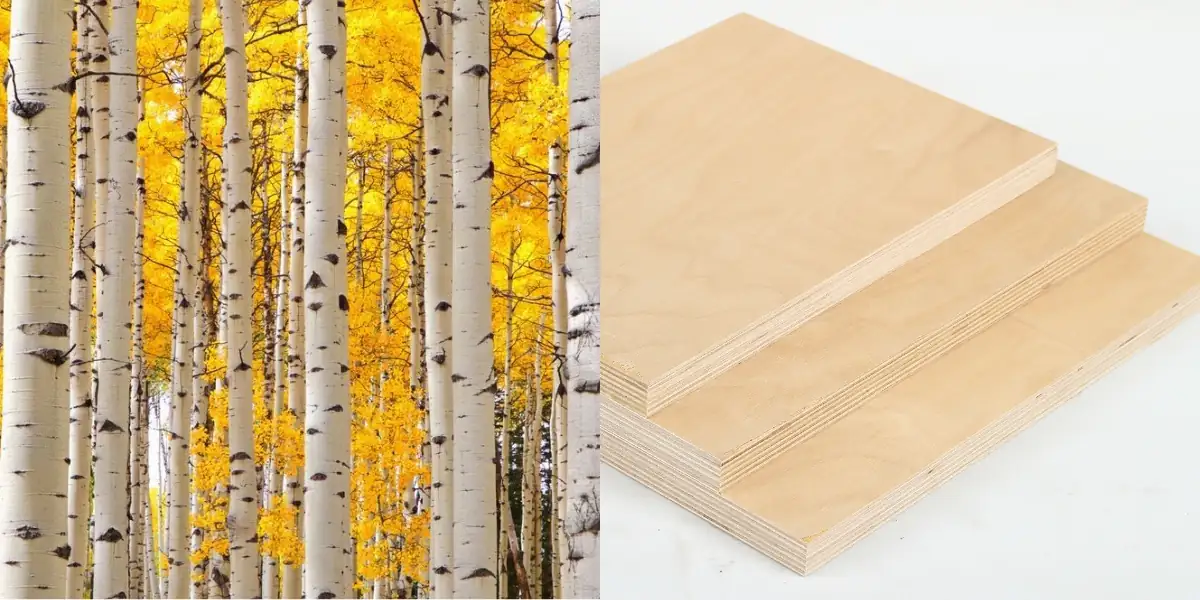
Common birch plywood thicknesses include 3 mm, 4 mm, 6 mm, 9 mm, 12 mm, 15 mm, 18 mm, and 21 mm, although available sizes and thicknesses vary by manufacturer.
Thickness affects:
- Panel stiffness
- Weight
- Load capacity
- Edge strength
- Screw holding
- Machining performance
For example, thin birch plywood may be suitable for drawer bottoms, lightweight furniture components, and certain curved applications. Thicker panels are often selected for shelves, workbenches, furniture structures, and heavy-duty components.
However, a thicker panel is not automatically better. Veneer quality, bonding, core construction, and manufacturing accuracy also have a major effect on performance.
Symmetry in Birch Plywood Construction
Symmetry means that the veneer layers are arranged in a balanced way around the center of the plywood panel.
A balanced construction helps distribute internal stresses more evenly. This can improve panel flatness and reduce the risk of:
- Warping
- Bowing
- Twisting
- Uneven dimensional movement
Symmetrical construction is particularly important for furniture manufacturers and CNC machining applications, where dimensional accuracy and flatness are important.
If the construction is significantly unbalanced, different layers may react differently to changes in moisture and temperature, increasing the risk of panel deformation.
What Are Core Gaps in Birch Plywood?
Core gaps are empty spaces or voids between internal veneer layers.
They can occur because of:
- Poor-quality core veneers
- Inaccurate veneer cutting
- Poor veneer preparation
- Insufficient adhesive
- Improper assembly
- Manufacturing defects
Large core gaps can negatively affect plywood performance.
Why Are Core Gaps a Problem?
Edge strength: When a panel is cut, large internal gaps may become exposed and create weak or uneven edges.
Screw holding: Voids reduce the amount of solid wood available around screws and fasteners.
CNC machining: Core gaps can become visible after routing, drilling, or cutting, resulting in inconsistent edges.
Structural consistency: Even when a plywood surface looks excellent, internal voids can create localized weak areas.
For high-quality birch plywood, buyers should therefore inspect both the surface and the internal core construction.
How to Check Birch Plywood Construction
When purchasing birch plywood, do not evaluate the product only by its face appearance. Check the complete construction.
1. Check the Number of Plies
Confirm that the actual number of veneer layers matches the supplier’s specification.
2. Inspect the Panel Edge
Look at the exposed edge to check whether the veneer layers are uniform and properly bonded.
3. Check for Core Gaps
Look for large visible voids, gaps, or poorly repaired areas inside the core.
4. Measure Thickness
Check whether the actual thickness is consistent with the specified tolerance.
5. Evaluate Symmetry
For furniture and precision applications, ask the supplier whether the panel uses balanced veneer construction.
6. Check Face and Back Grades
Make sure the face and back grades meet the appearance requirements of your project.
7. Request Technical Specifications
For commercial orders, buyers should request information about veneer species, number of plies, thickness tolerance, moisture content, glue type, face/back grades, and applicable certifications.
What Makes High-Quality Birch Plywood Construction?
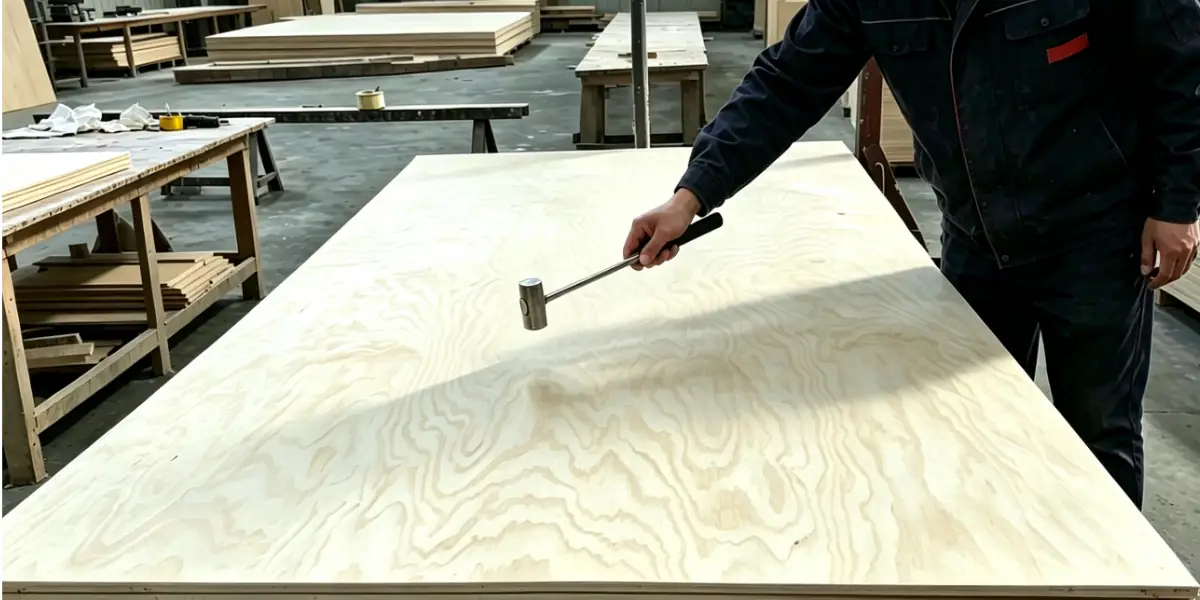
High-quality birch plywood is not determined by one factor. A reliable panel normally combines:
- Uniform veneer thickness
- Good-quality birch veneers
- Strong adhesive bonding
- Proper cross-grain orientation
- Balanced construction
- Minimal core gaps
- Consistent panel thickness
- Suitable face and back grades
- Controlled moisture content
- Stable manufacturing conditions
These factors work together to determine the plywood’s appearance, strength, stability, and machining performance.
Conclusion
Understanding birch plywood construction makes it easier to compare different plywood products and select the right material for your project.
The basic structure includes face veneer, core veneers, and back veneer, while overall performance depends on the number of plies, cross-grain construction, thickness, symmetry, bonding quality, and core gaps.
Want to learn more about birch plywood construction, specifications, and available grades? Contact us for more information and professional plywood solutions for your project.