Introduction
High-quality film faced plywood plays a critical role in concrete formwork projects. It directly affects concrete surface finish, panel reuse times, labor costs, and overall project efficiency.
However, many buyers focus only on price and overlook important quality indicators such as core construction, glue performance, film quality, and manufacturing precision.
This guide explains how professionals evaluate high-quality film faced plywood and what factors you should consider before purchasing.
What Is High-Quality Film Faced Plywood?
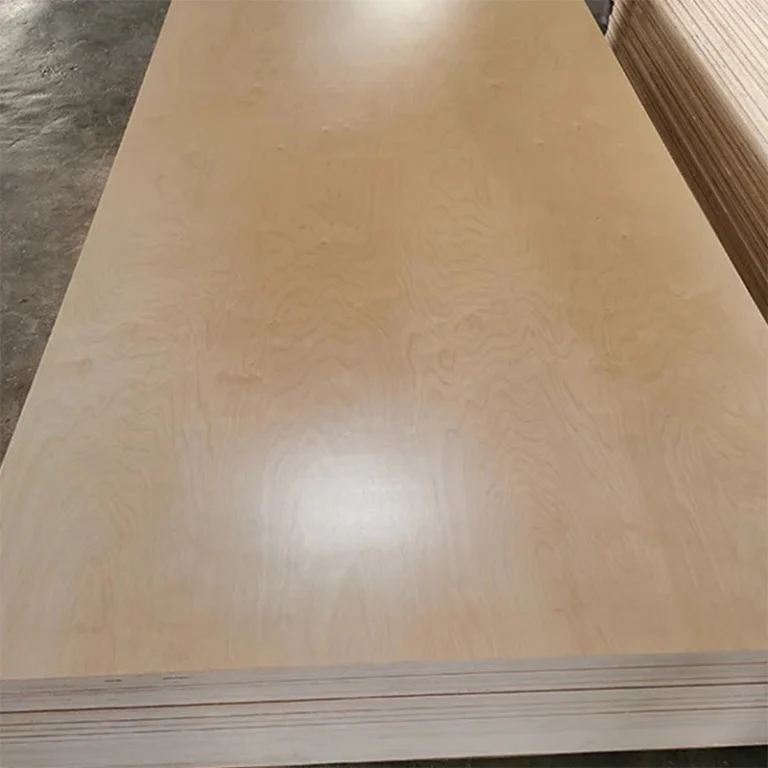
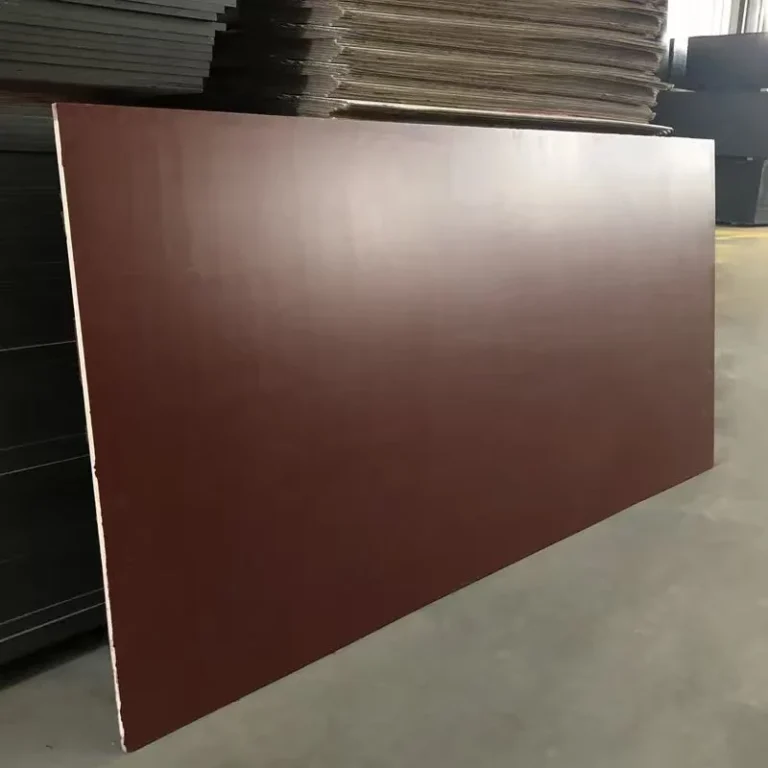
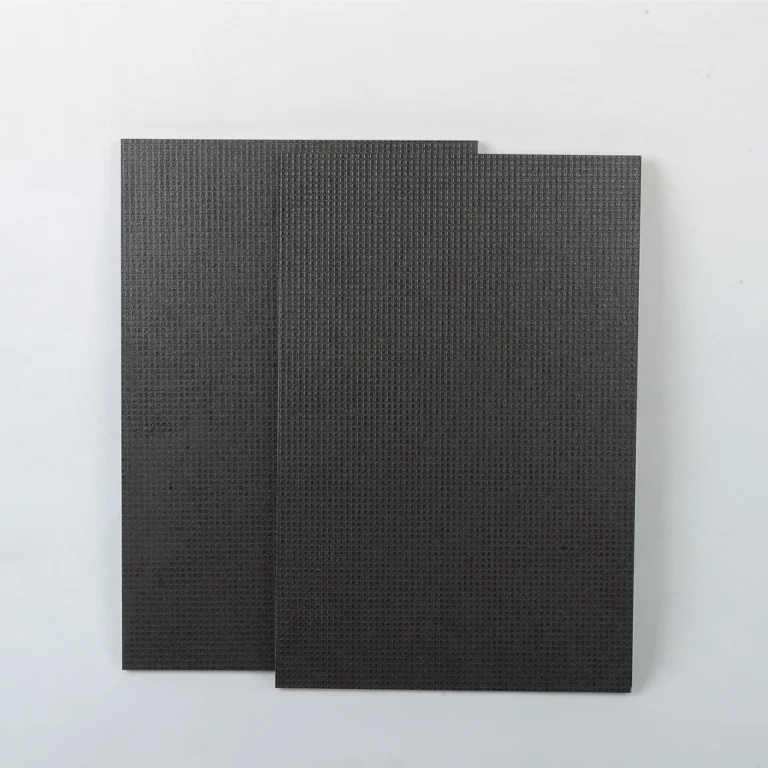
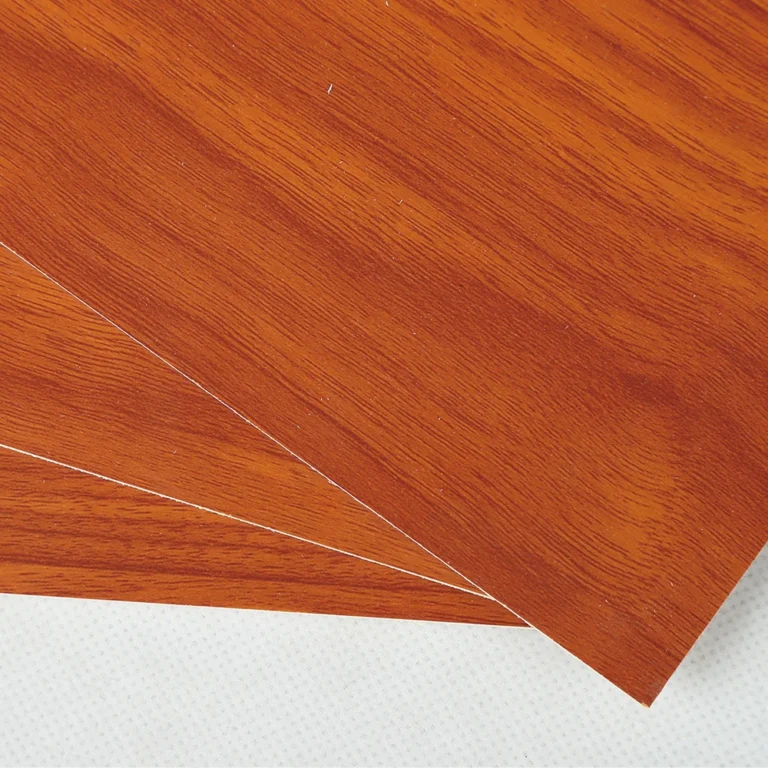
High-quality film faced plywood is a plywood panel manufactured with premium veneers, waterproof adhesive, and durable phenolic film. It is designed for repeated use in concrete formwork while maintaining excellent dimensional stability and surface smoothness.
Compared with lower-grade panels, high-quality film faced plywood typically offers:
- Higher bending strength
- Better water resistance
- Stronger bonding
- More reuse cycles
- Smoother concrete finish
- Lower total construction cost
Why Quality Matters
Better Concrete Surface
A smooth and durable film surface helps create cleaner concrete finishes with fewer surface defects.
Benefits include:
- Less patching and repair work
- Reduced finishing time
- Improved concrete appearance
- More consistent project results
High-quality phenolic film coating also helps prevent concrete from sticking to the panel surface, making demolding easier.
Longer Service Life
Premium plywood can be reused significantly more times when properly handled and maintained.
Higher reuse cycles help reduce:
- Material replacement costs
- Transportation expenses
- Construction downtime
The actual number of reuse cycles depends on factors such as film quality, core material, glue performance, and maintenance practices. Learn more about film faced plywood reuse times and the factors affecting panel durability.
Greater Structural Stability
High-quality cores provide better strength and dimensional stability, helping panels maintain their shape during repeated use.
Premium film faced plywood minimizes:
- Warping
- Delamination
- Swelling
- Edge damage
Stable panel performance ensures safer installation and better concrete formwork results.
8 Factors That Determine High-Quality Film Faced Plywood
1. Film Quality
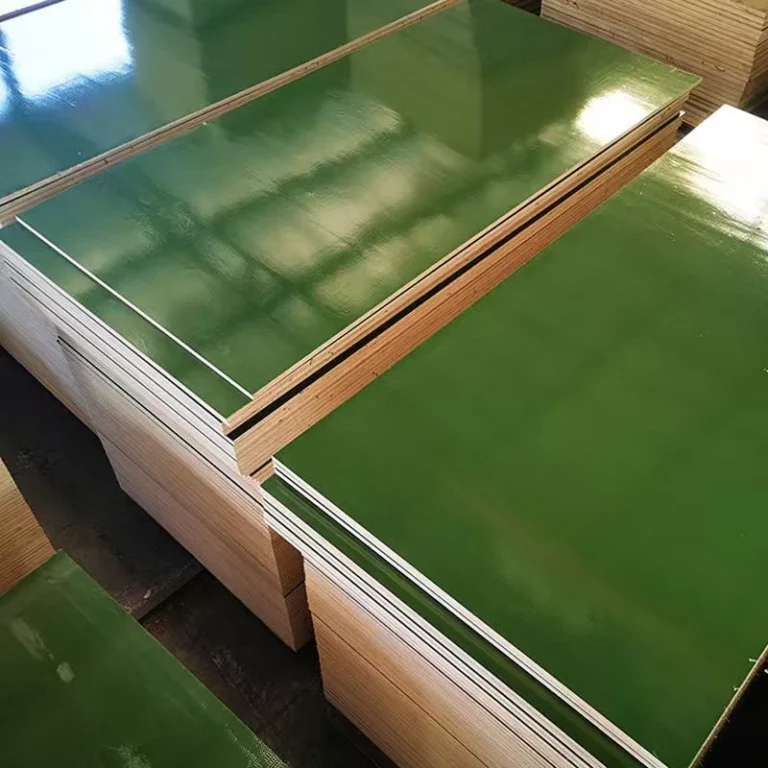
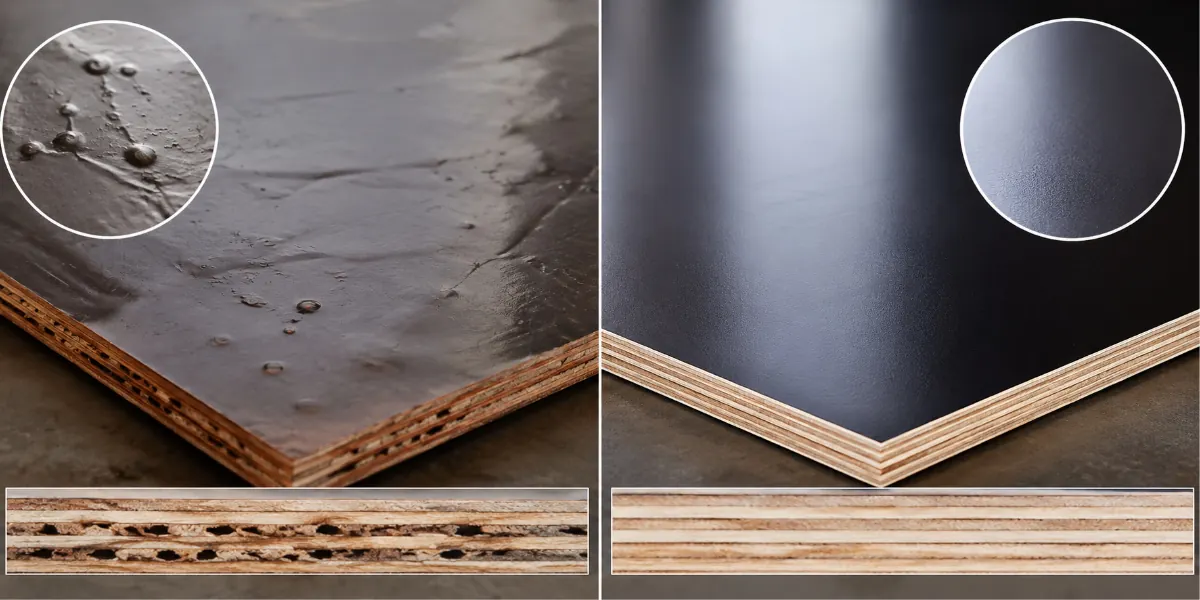
The phenolic film is the first protective layer.
A good film should provide:
- Uniform color
- Smooth finish
- Scratch resistance
- Water resistance
- Wear resistance
Poor-quality film often develops:
- Bubbles
- Cracks
- Peeling
- Surface damage
2. Core Material
The core determines most of the plywood’s strength.
Common core options include:
| Core Material | Quality | Typical Application |
|---|---|---|
| Birch | Excellent | Premium formwork |
| Hardwood | Very Good | Heavy-duty construction |
| Eucalyptus | Good | Commercial projects |
| Poplar | Standard | Budget projects |
| Mixed Core | Varies | Economy grade |
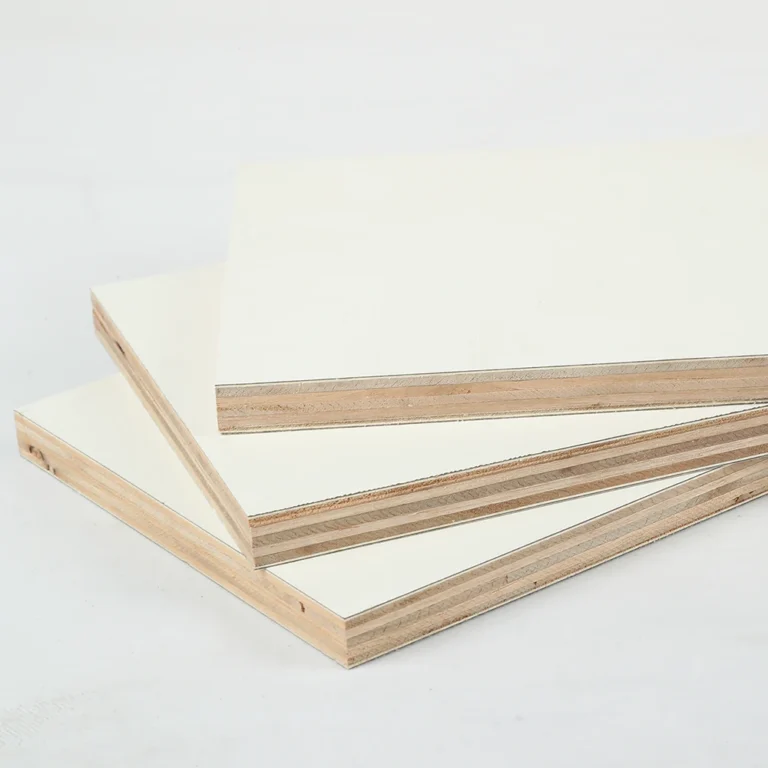
Premium plywood generally uses full hardwood or birch core with minimal voids.
3. Glue Type
Glue quality determines water resistance.
Common adhesive types include:
Phenolic WBP Glue
Advantages:
- 100% waterproof
- Boiling water resistant
- Exterior grade
- Best durability
Ideal for repeated concrete formwork.
Melamine Glue
Advantages:
- Moderate water resistance
- Lower cost
Suitable for light-duty construction.
4. Veneer Quality
High-quality veneer should have:
- Uniform thickness
- No decay
- Minimal knots
- No open gaps
- Tight bonding
Better veneers improve:
- Load capacity
- Bonding strength
- Reuse performance
5. Thickness Tolerance
Professional manufacturers maintain strict thickness tolerance.
Typical tolerance:
- ±0.3 mm
- ±0.5 mm
Accurate thickness ensures:
- Better alignment
- Stable installation
- Consistent concrete finish
6. Density and Weight
Higher density usually indicates:
- Better compression strength
- Higher durability
- Longer service life
However, extremely heavy panels may increase labor costs, so the ideal balance depends on project requirements.
7. Edge Sealing
The panel edges are especially vulnerable to moisture.
Premium plywood features waterproof edge sealing that helps:
- Prevent water penetration
- Reduce swelling
- Extend reuse times
Look for smooth, evenly coated edges without cracks or exposed veneers.
8. Manufacturing Quality
Reliable manufacturers implement strict quality control throughout production.
Quality inspections typically include:
- Core inspection
- Glue spread control
- Hot pressing
- Moisture testing
- Thickness measurement
- Bond strength testing
- Final appearance inspection
Consistent manufacturing results in more stable and durable plywood.
How to Identify High-Quality Film Faced Plywood Before Buying
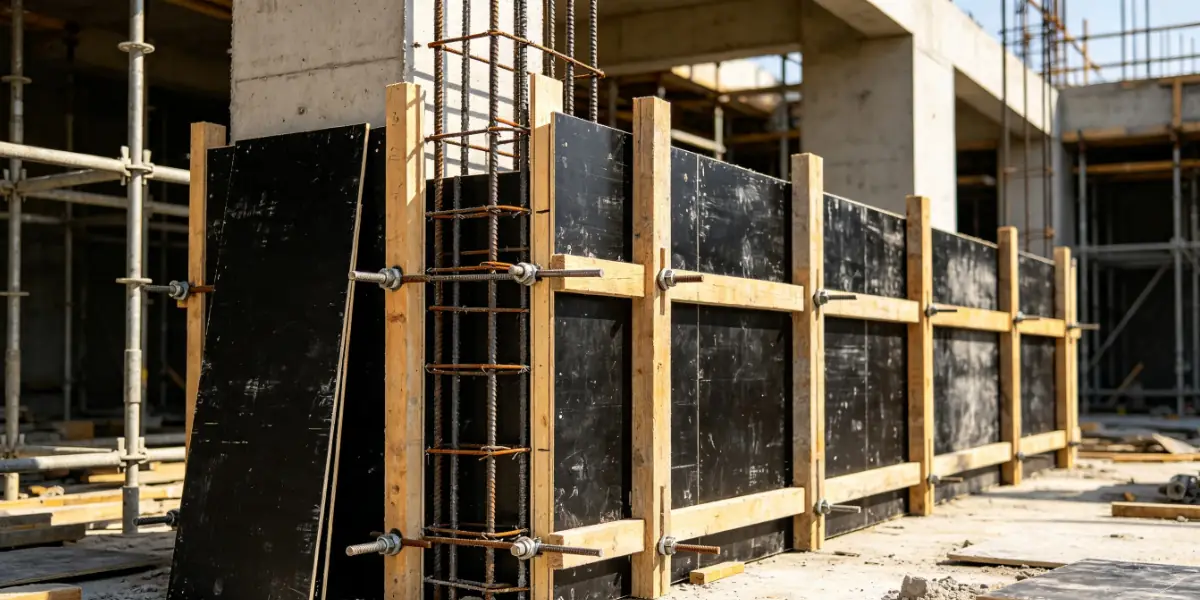
Professional buyers usually inspect several key areas before placing an order.
Surface
Look for:
- Smooth finish
- Uniform film
- No bubbles
- No scratches
Edge
Check for:
- Tight veneer layers
- Waterproof paint
- No open gaps
Core
Ask suppliers to provide:
- Cross-section photos
- Core composition
- Density information
Bonding
Request:
- Boiling test results
- Bond strength reports
Certifications
Reliable manufacturers may provide:
- FSC
- CE
- CARB
- ISO 9001
Common Problems with Low-Quality Film Faced Plywood
Cheap plywood often develops problems such as:
- Film peeling
- Delamination
- Core gaps
- Water swelling
- Edge cracking
- Thickness inconsistency
- Poor concrete finish
- Low reuse cycles
Although cheaper initially, these issues usually increase the overall project cost.
Questions to Ask Your Supplier
Before ordering, consider asking:
- What core material is used?
- Is the glue WBP phenolic?
- What is the expected reuse time?
- What film weight is available?
- What is the moisture content?
- Can you provide quality inspection reports?
- What certifications do you have?
- Can custom sizes and thicknesses be supplied?
Tips for Extending the Service Life
Even premium plywood requires proper handling.
Best practices include:
- Clean panels after each use.
- Apply release oil before pouring concrete.
- Store panels in a dry, covered area.
- Avoid dragging panels across rough surfaces.
- Repair damaged edges promptly.
- Stack panels flat to prevent warping.
Proper maintenance can significantly increase reuse cycles.
Conclusion
Choosing high-quality film faced plywood is about much more than selecting the lowest price. The quality of the film, core material, adhesive, veneer, thickness tolerance, and manufacturing process all influence the panel’s durability and performance.
By carefully evaluating these factors before purchasing, contractors and distributors can reduce replacement costs, improve concrete quality, and achieve better long-term value.
Choosing the right supplier is equally important as selecting the right panel. Working with an experienced film faced plywood manufacturer ensures stable quality and reliable supply.
FAQ
How can I tell if film faced plywood is high quality?
Check the film coating, core material, glue type, thickness tolerance, edge sealing, and manufacturing quality. High-quality panels have smooth surfaces, waterproof phenolic glue, and minimal core voids.
Which core material is best for film faced plywood?
Birch core is generally considered the highest-quality option due to its strength and durability. Hardwood and eucalyptus cores also offer excellent performance for construction formwork.
Is phenolic glue better than melamine glue?
Yes. Phenolic WBP glue provides superior waterproof performance and is the preferred choice for reusable concrete formwork.
How many times can high-quality film faced plywood be reused?
Depending on the manufacturing quality, maintenance, and construction conditions, premium film faced plywood can typically be reused 20–50+ times, while lower-quality panels may only last a few cycles.