Introduction
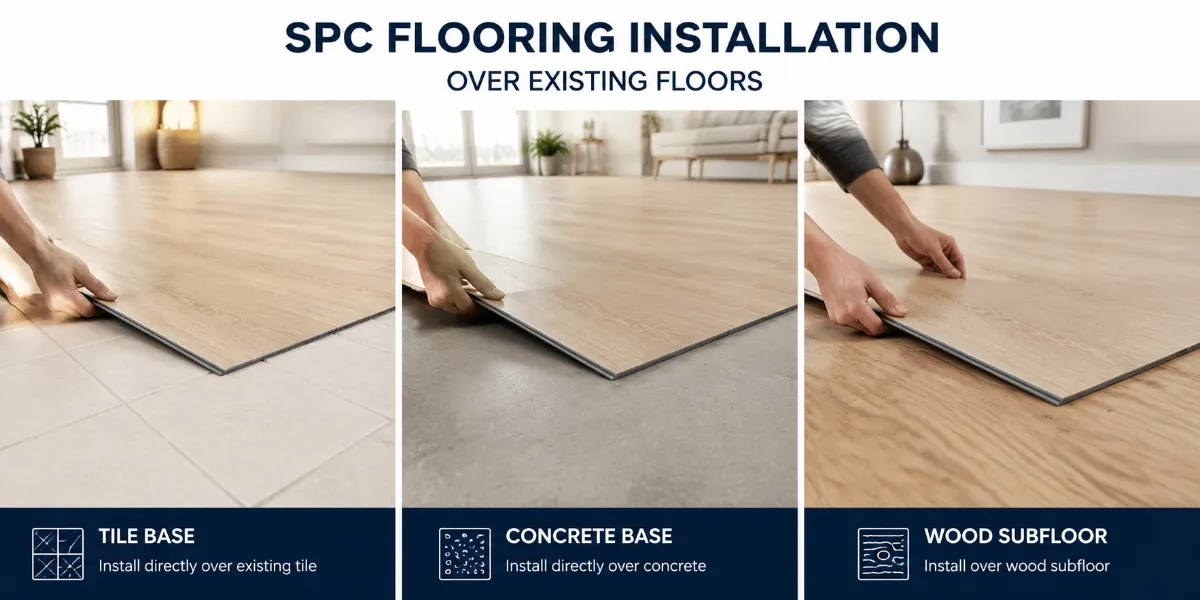
SPC flooring installation over tile, concrete, and wood is one of the most searched questions in modern flooring renovation and construction projects. As a rigid core click-lock flooring system, SPC (Stone Plastic Composite) flooring is designed to be installed over a wide range of existing subfloors without full demolition.
However, while installation flexibility is one of its biggest advantages, long-term performance depends heavily on proper subfloor preparation, moisture control, and surface leveling.
In this complete guide, you will learn whether SPC flooring can be installed over tile, concrete, and wood, plus professional installation requirements, mistakes to avoid, and industry best practices.
SPC Flooring Installation Over Tile: Is It Possible?
Yes, SPC flooring installation over tile is widely used in residential and commercial renovation projects.
Because SPC flooring is a floating click-lock system, it can be installed directly over ceramic or porcelain tile without removing the existing surface—saving time, labor, and demolition costs.
Requirements Before Installation
To ensure a stable installation, the tile surface must be:
- Flat and level (maximum 2–3mm variation per 2m)
- Structurally solid with no loose tiles
- Clean, dry, and free of grease or dust
- Free from deep grout lines or major cracks
Professional Notes
- Deep grout lines should be filled with leveling compound
- Highly polished tiles may require light abrasion for grip stability
- Uneven tiles can lead to click-lock stress and long-term joint failure
Key Advantage
Installing SPC flooring over tile is one of the fastest renovation methods for kitchens, apartments, and commercial spaces because it eliminates demolition work. 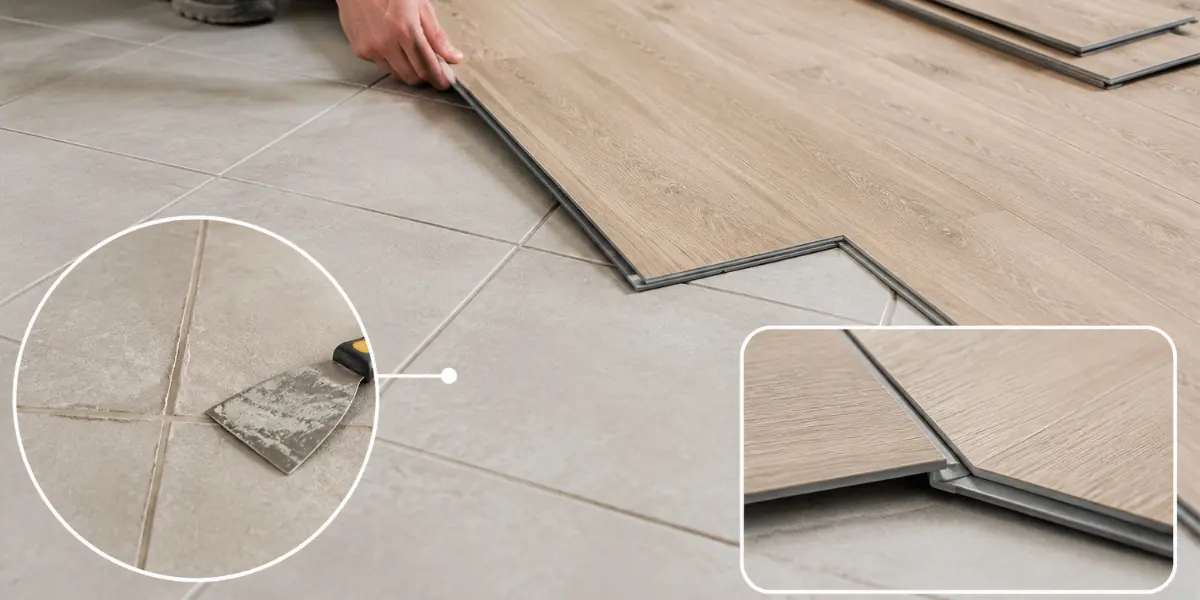
SPC Flooring Installation Over Concrete: Requirements Explained
SPC flooring installation over concrete is one of the most common applications in both residential and commercial flooring systems.
Concrete subfloors provide a strong base, but proper preparation is essential to avoid moisture-related issues.
Concrete Subfloor Requirements
Before installation, ensure:
- Concrete is fully cured (typically 60–90 days minimum)
- Surface moisture level is within acceptable limits (moisture test recommended)
- Floor flatness is within 2–3mm tolerance over 2 meters
- No cracks, dust, or surface contamination
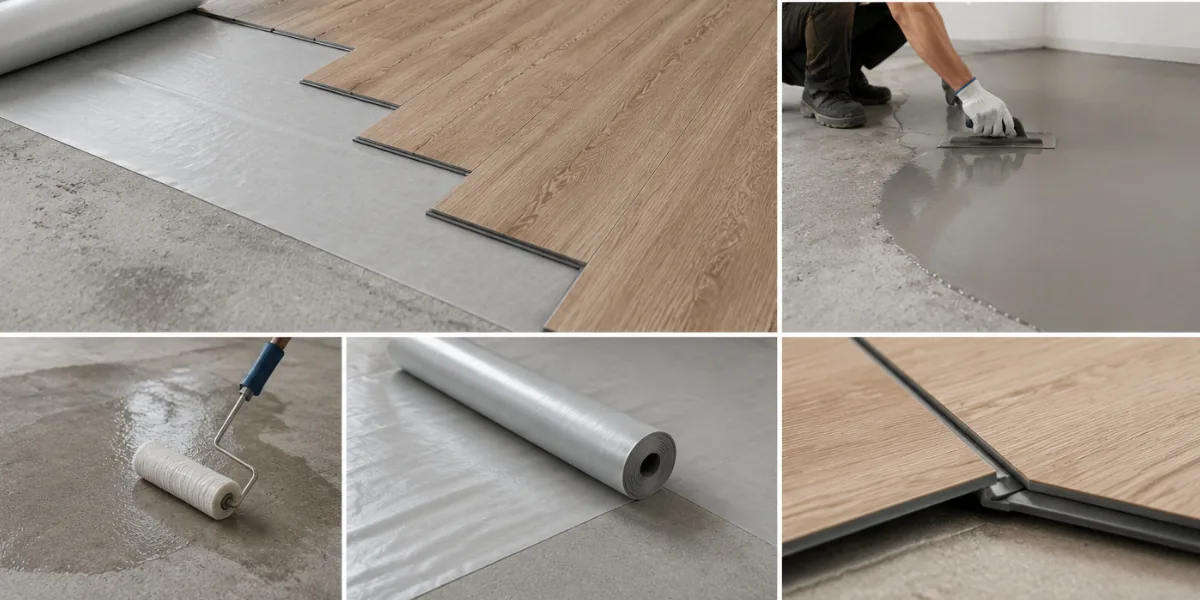
Moisture Protection System
Although SPC flooring is 100% waterproof, concrete can still release moisture vapor.
Therefore:
- Moisture barrier film may be required
- Underlayment depends on product specification
- Basements require extra moisture control attention
Ideal Applications
SPC flooring over concrete is ideal for:
- Ground floors
- Commercial buildings
- Warehouses and offices
- Basement renovation projects
SPC Flooring Installation Over Wood Subfloor: What You Need to Know
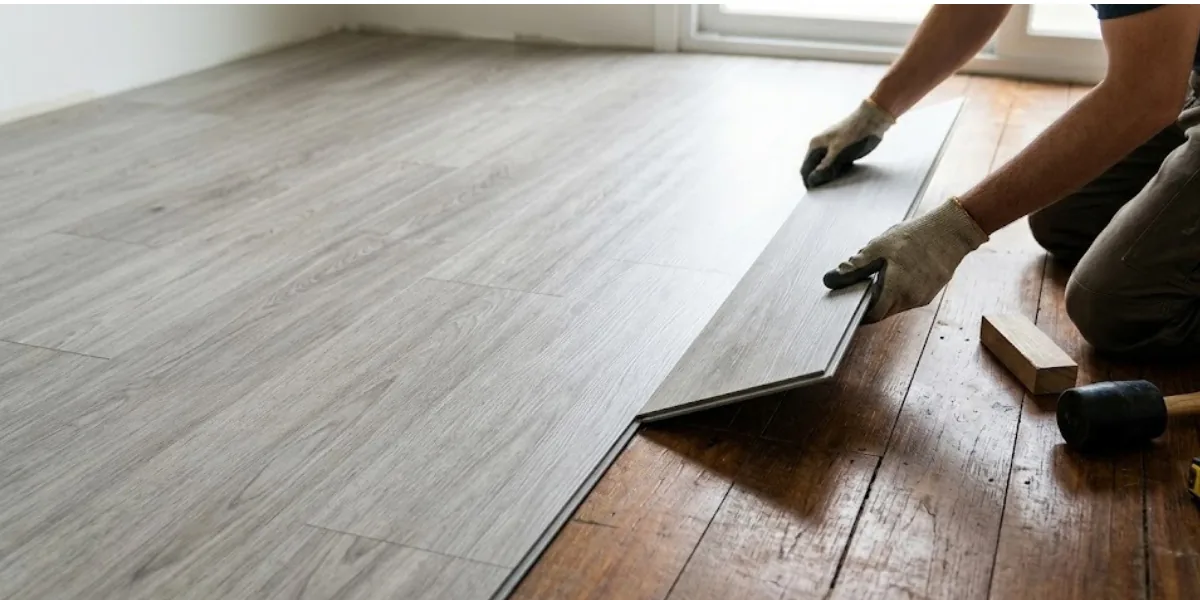
Yes, SPC flooring installation over wood subfloor is possible, but it requires the most careful evaluation among all subfloor types.
Wood is a dynamic material, meaning it expands, contracts, and may flex over time.
Wood Subfloor Requirements
The wood surface must be:
- Structurally stable with no movement or bounce
- Fully secured (no squeaks or loose boards)
- Level and smooth across the entire surface
- Made of stable plywood or OSB panels
Critical Risk Factors
Improper wood subfloor conditions may cause:
- Click-lock separation
- Joint cracking or lifting
- Noise during walking
- Long-term structural instability
Professional Recommendation
For best results:
👉 Install a thin plywood overlay if the existing wood surface is uneven or aged
👉 Ensure all fasteners are reinforced before installation
SPC Flooring Subfloor Preparation Checklist (Professional Standard)
Proper subfloor preparation is the most critical factor in SPC flooring installation performance.
1. Flatness Requirement
- Maximum tolerance: 2–3mm per 2 meters
2. Moisture Control
- Concrete moisture testing recommended
- Avoid installation in high humidity conditions
3. Clean Surface
- Remove dust, oil, adhesives, and debris
- Ensure no loose particles remain
4. Expansion Gap
- Leave 6–10mm expansion space around walls and fixed objects
5. Acclimation Process
- Allow flooring to acclimate for 24–48 hours before installation
6. Subfloor Stability
- No movement, bounce, or structural instability allowed
SPC Flooring Over Existing Floors: Key Advantages
Installing SPC flooring over tile, concrete, and wood is one of the biggest advantages of modern rigid core flooring systems.
Benefits
- No demolition required
- Faster renovation timelines
- Lower labor and construction cost
- Reduced dust and waste
- Suitable for residential and commercial projects
- Compatible with floating installation systems
This makes SPC flooring a preferred solution for contractors, importers, and renovation companies worldwide.
Common SPC Flooring Installation Mistakes (Avoid These)
Even high-quality SPC flooring can fail if installed incorrectly.
Critical Mistakes
- Installing over uneven subfloor surfaces
- Ignoring moisture testing in concrete floors
- Skipping expansion gaps
- Using damaged click-lock boards
- Failing to clean dust and debris
- Installing without acclimation period
Consequences
- Floor lifting or buckling
- Click joint failure
- Noise and movement issues
- Reduced product lifespan
SPC Flooring for Contractors and Wholesale Projects
For large-scale construction and commercial projects, SPC flooring offers strong advantages in supply chain efficiency and installation speed.
Why Contractors Prefer SPC Flooring
- Fast installation reduces labor costs
- Suitable for bulk renovation projects
- Consistent manufacturing quality
- High durability for commercial use
- Easy logistics and shipping efficiency
B2B Considerations
When sourcing SPC flooring:
- Check wear layer thickness (0.3mm–0.7mm)
- Confirm dimensional stability standards
- Evaluate click-lock system strength
- Request moisture resistance test reports
FAQ: SPC Flooring Installation Questions
1. Can SPC flooring be installed over old tile without removing it?
Yes, as long as the tile surface is level, stable, and properly prepared.
2. Do I need underlayment for SPC flooring over concrete?
It depends on product type and site conditions. Moisture barriers are often recommended.
3. Is SPC flooring suitable for wood subfloors?
Yes, but only if the wood is stable, dry, and properly reinforced.
4. What happens if the subfloor is uneven?
It may cause click-lock failure, gaps, noise, and long-term structural damage.
5. Can SPC flooring be installed in basements?
Yes, SPC flooring is waterproof and suitable for basement environments with proper moisture control.
6. How long does SPC flooring installation take?
Most residential installations can be completed within 1–2 days depending on area size.
Conclusion
SPC flooring installation over tile, concrete, and wood is a highly flexible and efficient flooring solution, making it one of the most widely used materials in modern renovation and construction projects.
However, long-term performance depends entirely on proper subfloor preparation, moisture control, and correct installation practices.
For contractors, importers, and distributors, SPC flooring offers a strong combination of durability, speed of installation, and cost efficiency—making it a top choice in global flooring markets.